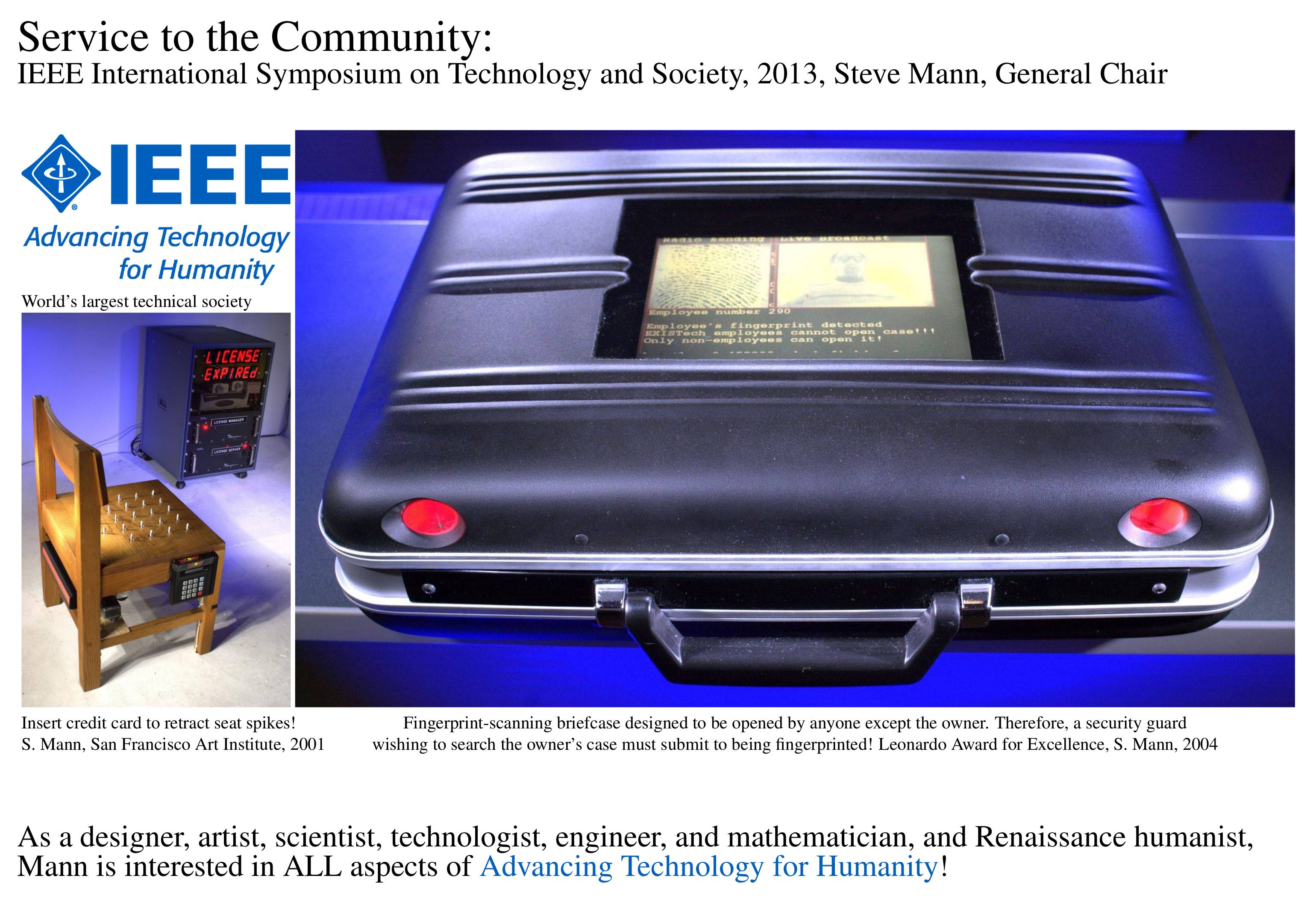
Slide 1
Mann's "Digital Eye Glass" began in the 1970s as a wearable camera and
wearable computer system, called ``Generation 1 Glass'' as a photographic
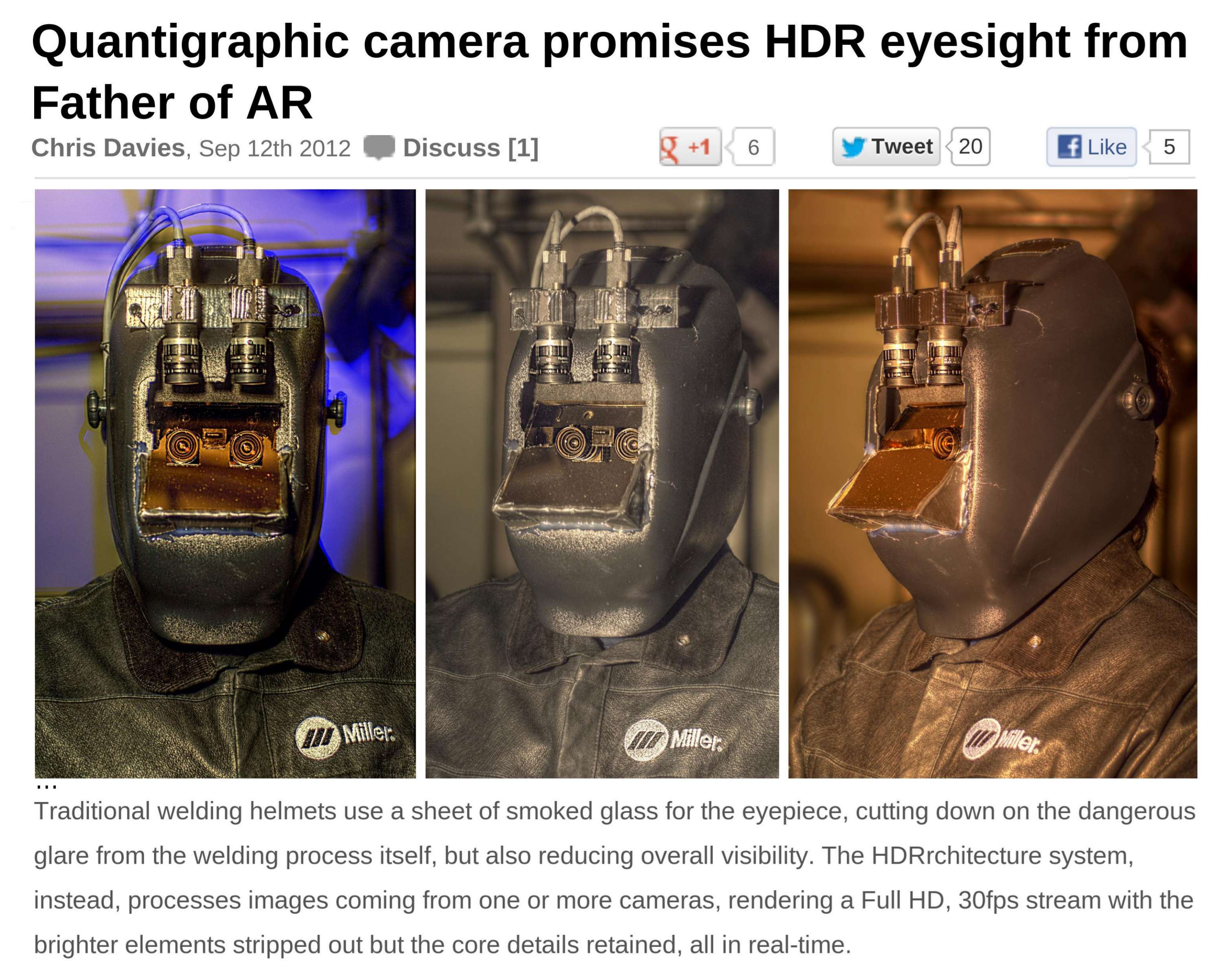
vision, inspired by a need to see welding and other high contrast scenes
better, as well as having a photographic vision for everyday life.
Generation-1 Glass had the camera separate from the eye.
Mann improved upon this with
Generation-2 Glass
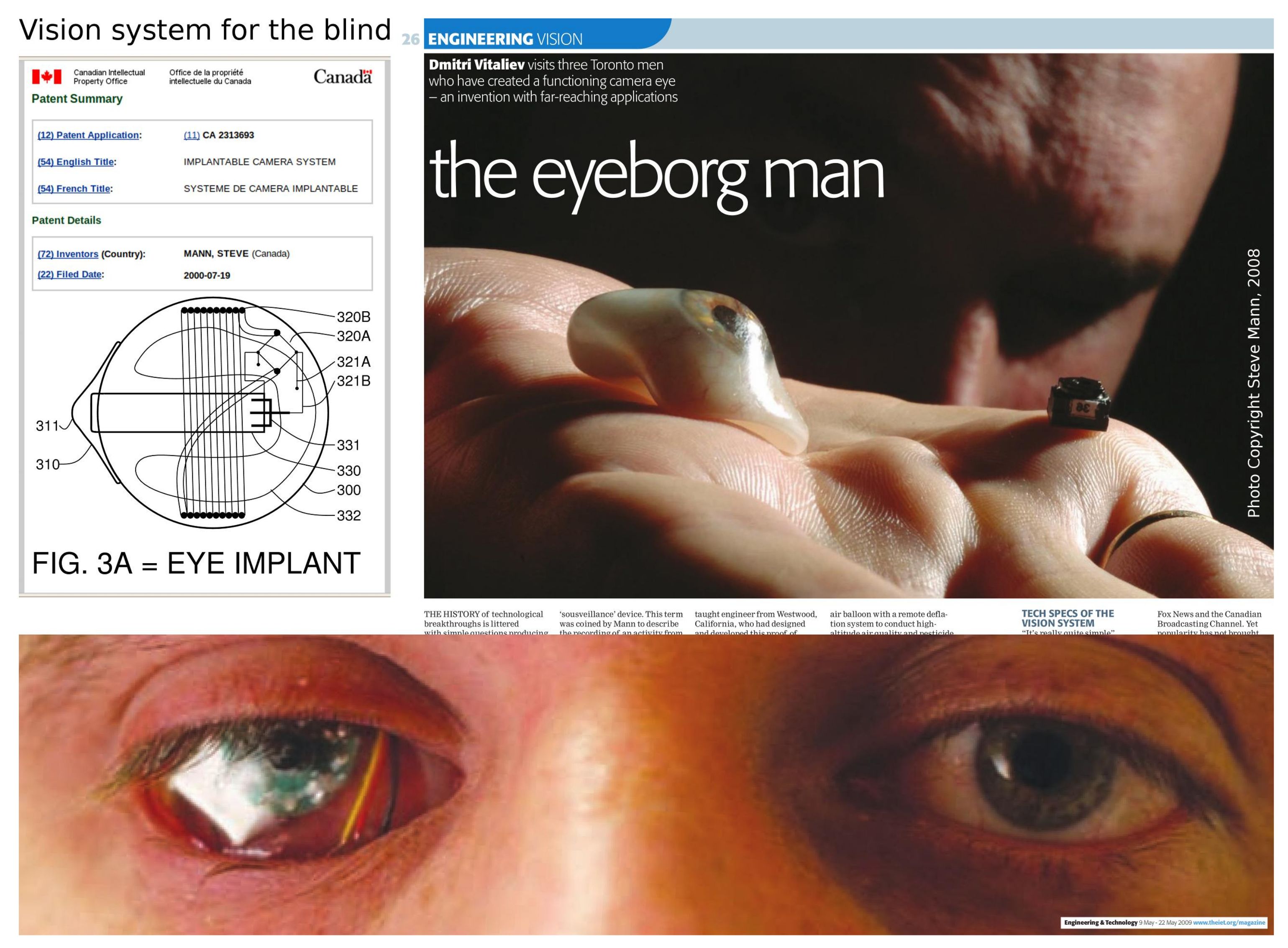
in which the eye itself was, in effect, the camera.
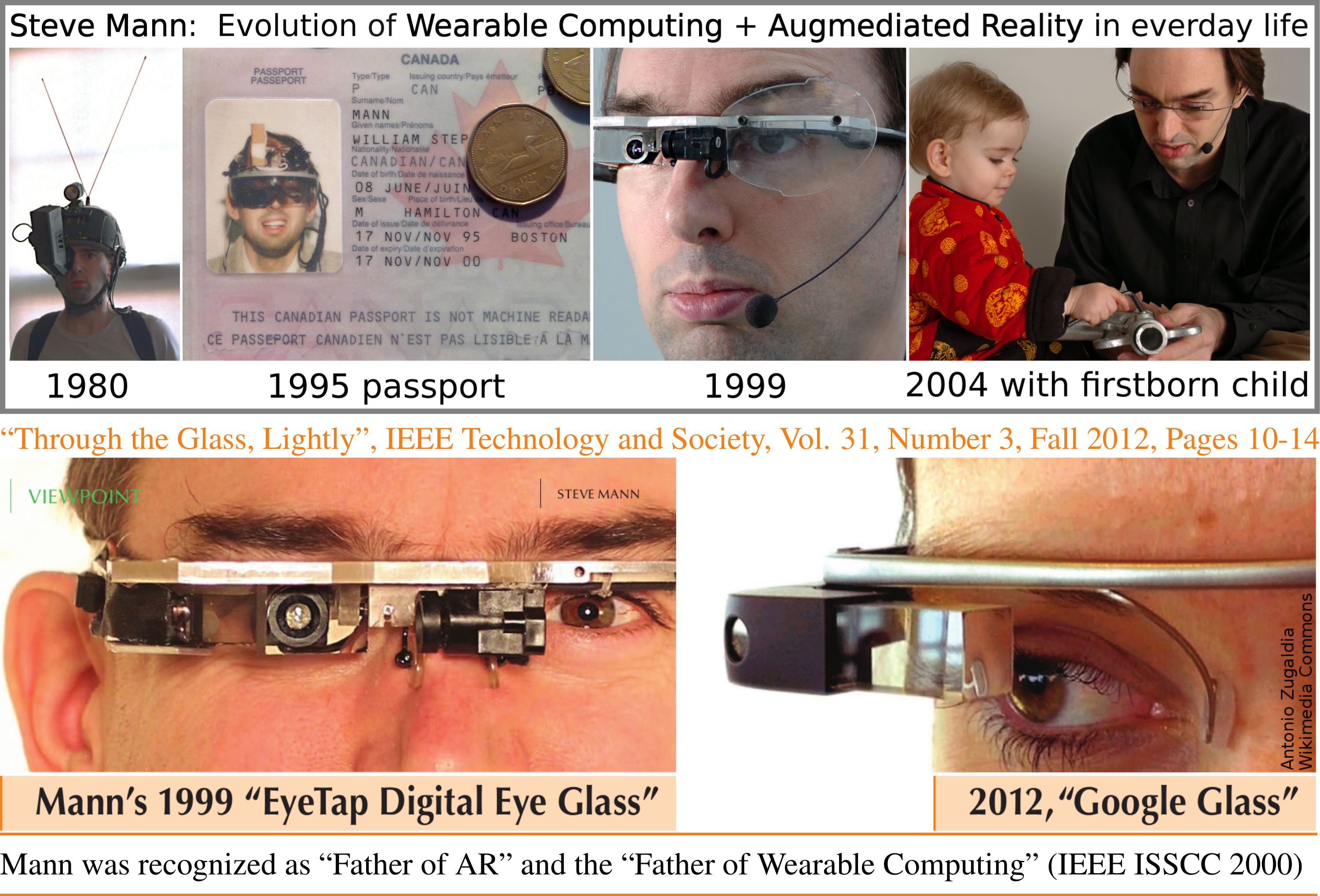
Slide 1, variation A
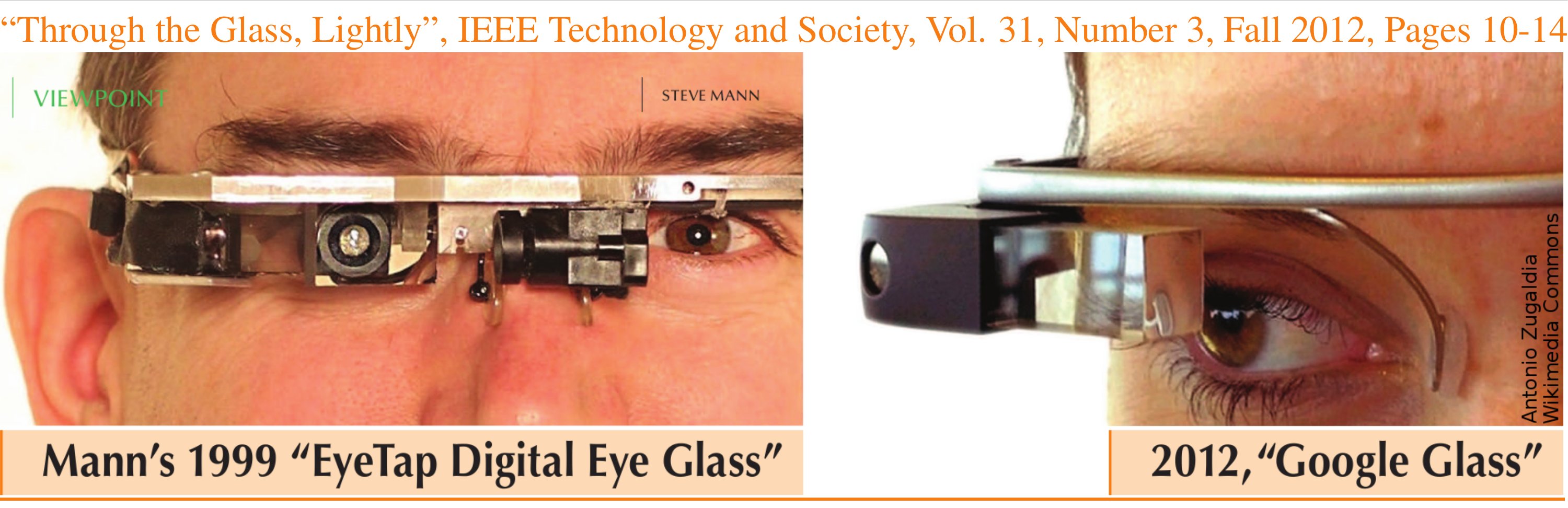
Slide 1, variation B
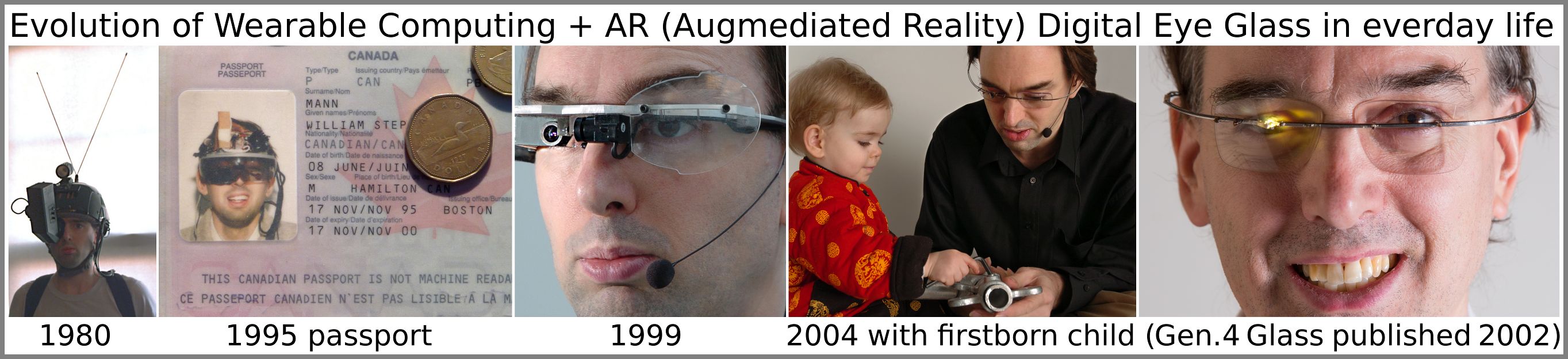
Slide 2
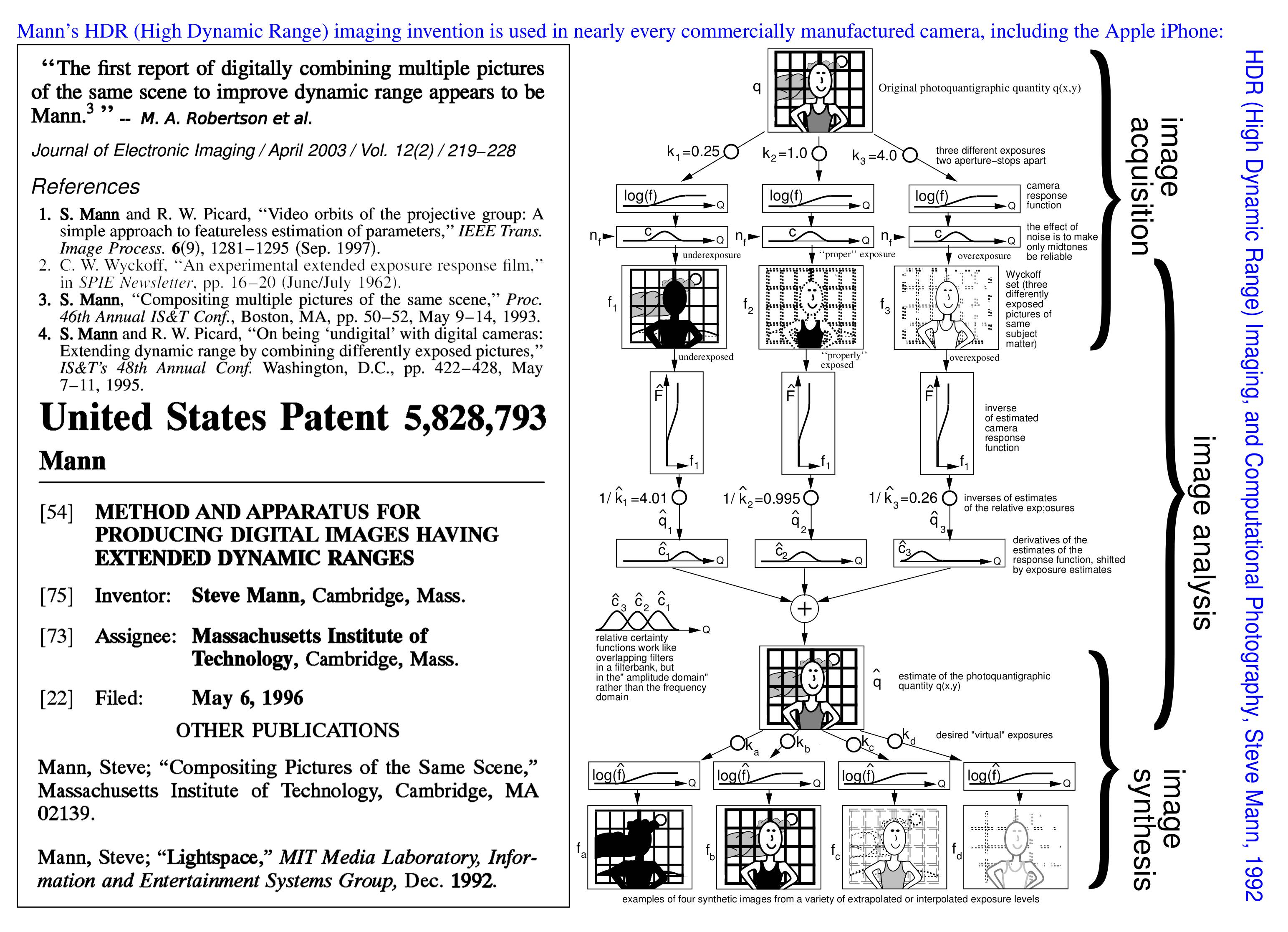
Mann invented something called HDR (High Dynamic Range Imaging) which processes
video in real time to help people see better:
Slide 3
This work has become of widespread interest lately:
Slide 4
In the future this technology can be implanted in the body to help the blind
and visually impaired:
Slide 5
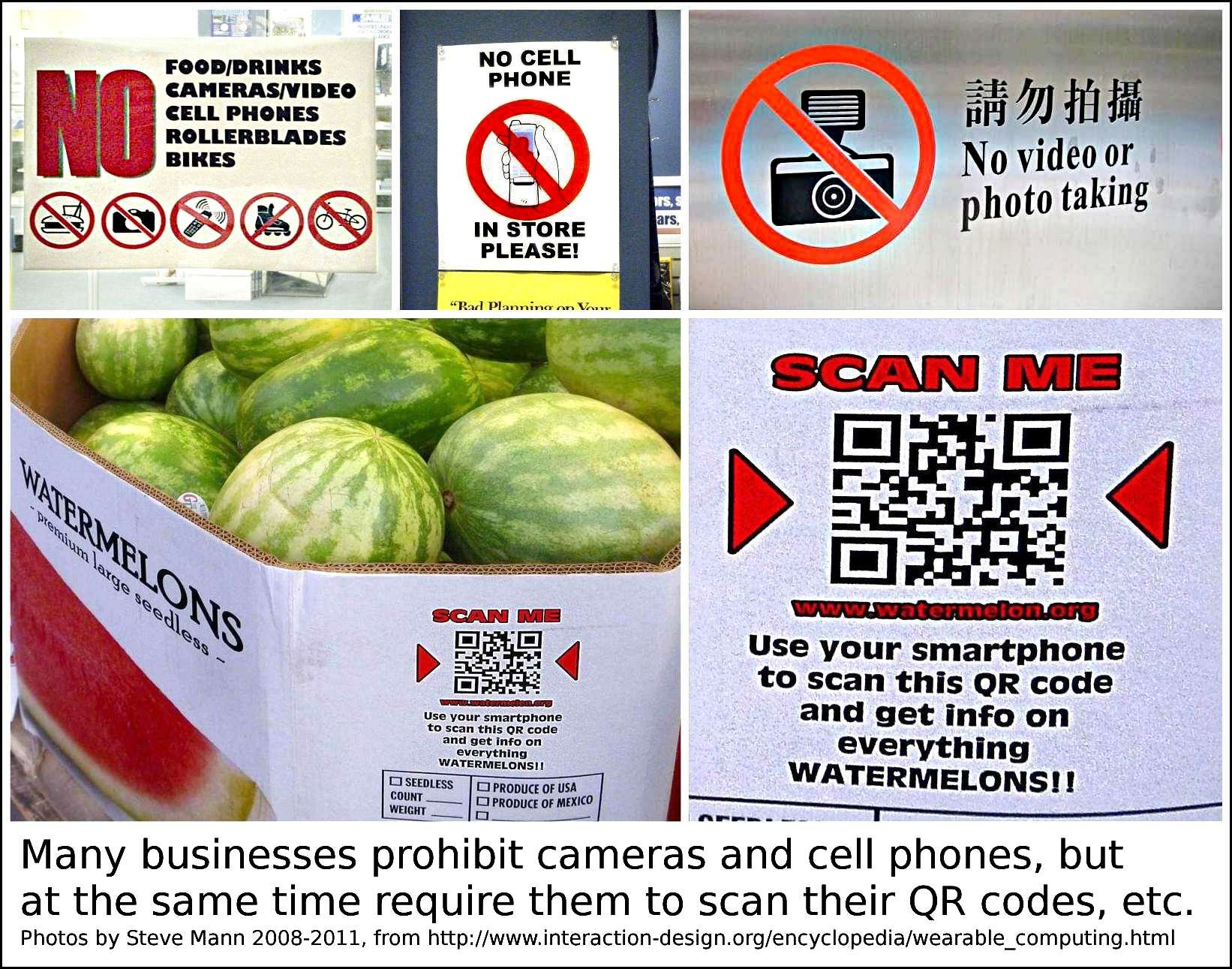
In many establishments photography is simultaneously prohibited and required:
Slide 6
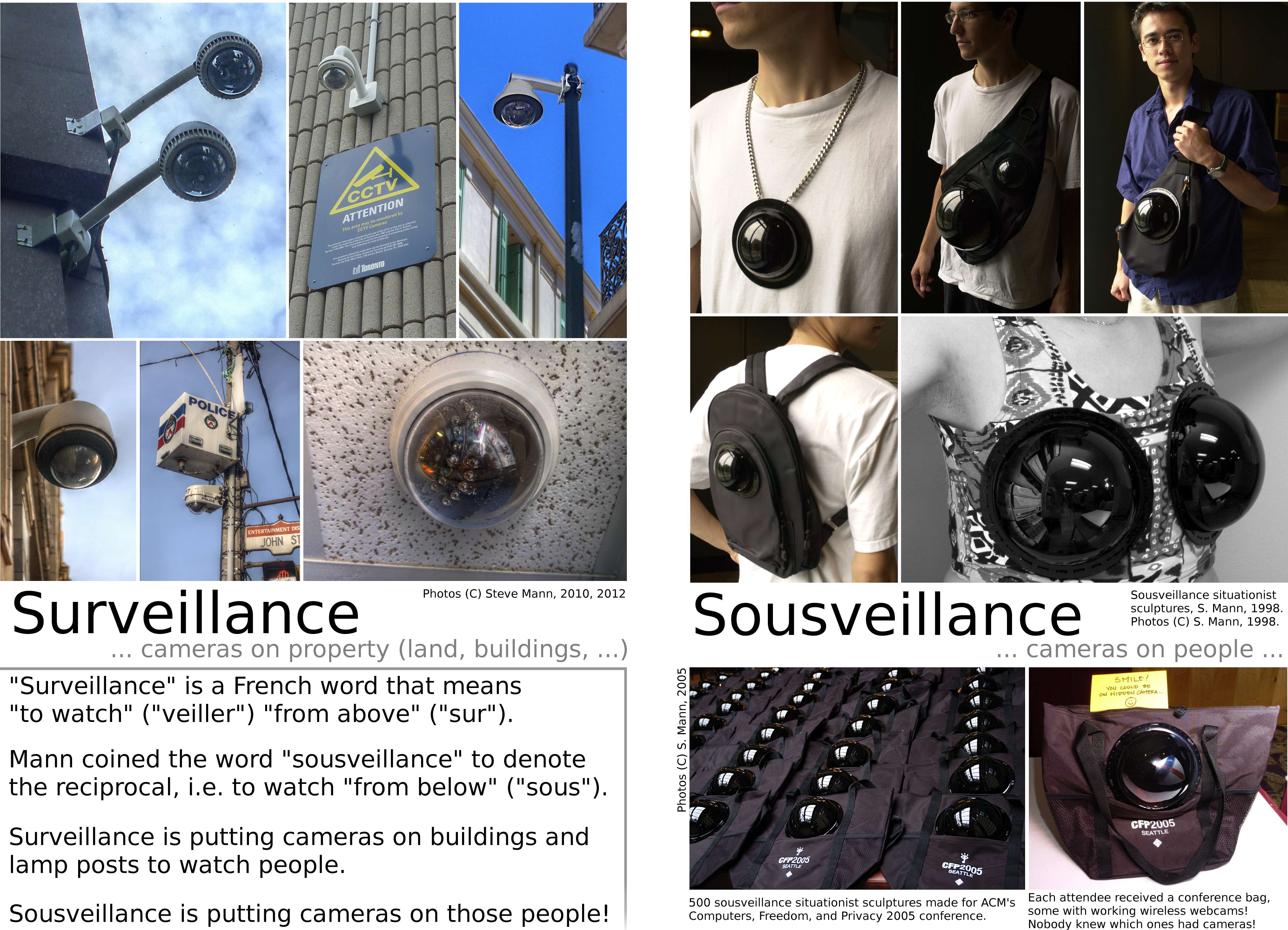
We've been moving toward a surveillance society. Surveillance is a French word
that comes from "sur" and "veillance". "Sur" means "from above" and "veillance"
means watching.
Therefore "surveillance" means "to watch from above", e.g. like when guards
watch over prisoners or police watch over suspects.
A newer phenomenon is "sousveillance" which means "to watch from below",
from the French prefix "sous" which means "from below".
Surveillance cameras are usually mounted to large entities like buildings
or land (by way of lamp posts).
Sousveillance cameras are usually held, carried, or worn by small entities
like people.
Slide 7
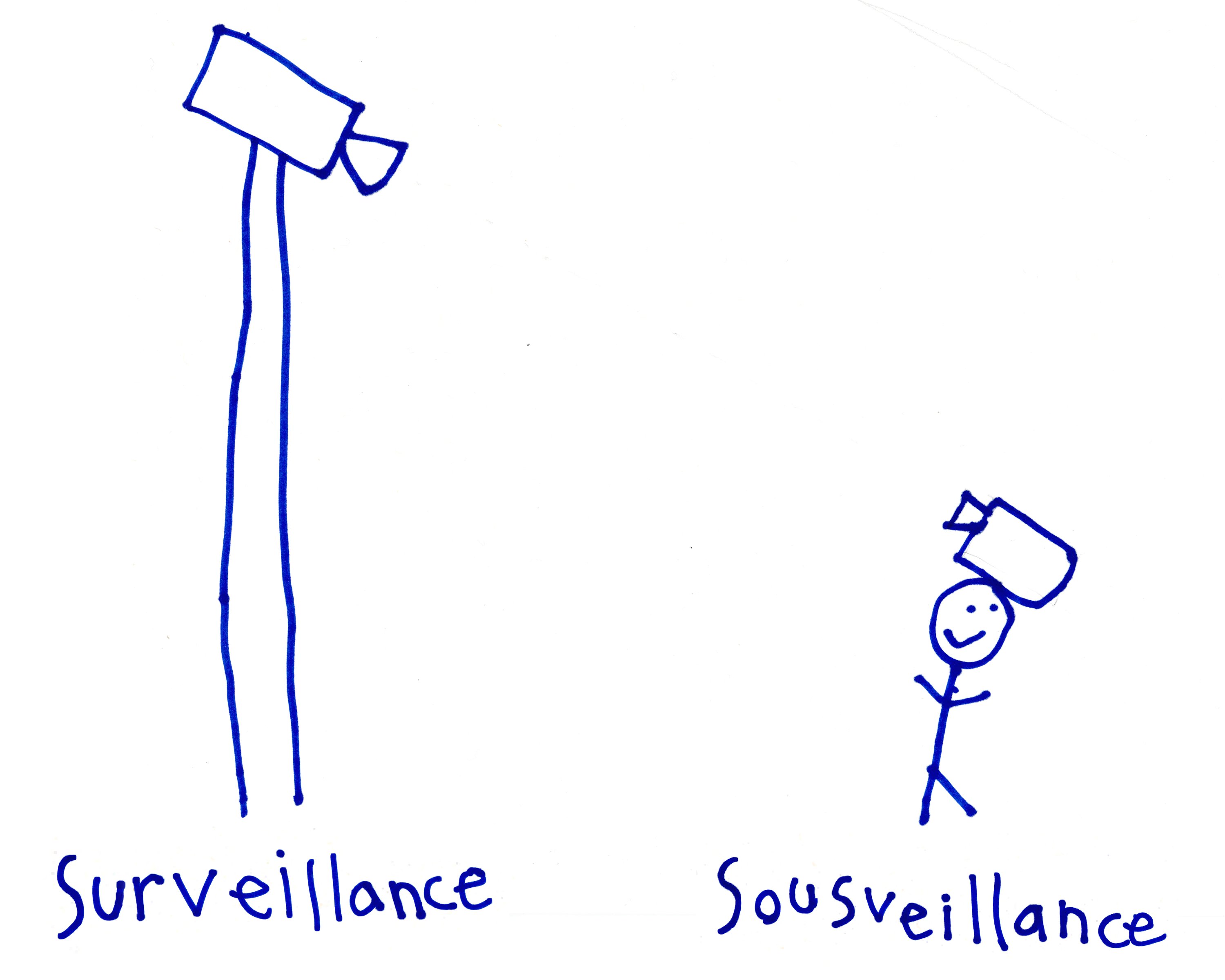
Whereas we've been taught to think only in terms of surveillance and not
sousveillance, both concepts
are easily understood by children. Stephanie, Age 6, ... drawing:
Slide 8
Whereas the goal of Glass (Digital Eye Glass) when it was first created,
35 years ago, was originally to help poeple see better, without necessarily
recording their entire lives,
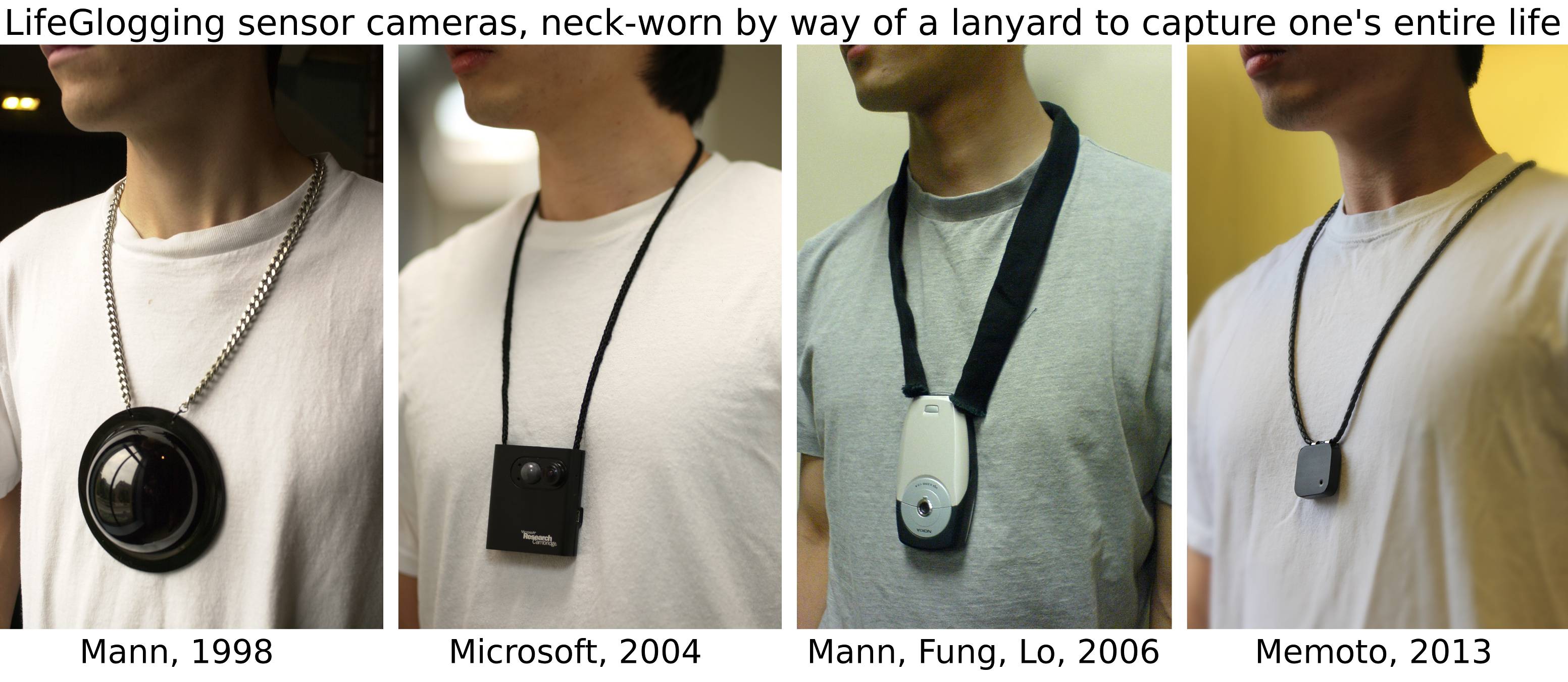
here's another invention to record one's entire life without necessarily helping
one see better:
Slide 9